
Beyond Labels: How Lush's Sourcing Protects the Planet
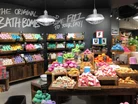
Lush was founded out of frustration with traditional cosmetics and a desire to offer natural, ethical and handmade products. Since its establishment in 1995, Lush has combined innovation with strong ethical values, creating pioneering beauty products that resonate globally. Among these, the iconic bath bomb, invented by Lush co-founder Mo Constantine in 1989, stands out as a global favourite. Handmade in Lush factories worldwide, the company sold more than 40.5 million bath bombs last year alone.
I had the opportunity to visit Lush’s manufacturing hub in Poole last December, a hive of activity as the team geared up for the Christmas and Valentine’s Day rush. Making its products by hand, the factory forms part of Lush’s broader estate, where ethical sourcing and sustainability drive every decision.
Fresh ingredients and ethical sourcing
One of the most fascinating parts of the visit was learning about Lush’s sourcing practices, including the particularly heartwarming story of its blueberry procurement. Most of these blueberries come from a family-owned farm in Dorset, just a stone’s throw from the Poole factory. Handpicked between June and September, the berries are quickly frozen to preserve their quality outside the harvesting season. Unlike other ingredients, blueberries retain their colour, nutrients and plump texture when frozen.
The Dorset farm, owned by David Trehane, has a unique history.
“My grandfather was the first person to introduce the blueberry to the UK after the Second World War and no one really knew what a blueberry was back then, as they’re a North American plant,” David explains.
Starting with just 100 plants, the farm thrived thanks to the fertile Dorset soil and went on to become the UK’s first commercial blueberry supplier. “You get the best quality product if we freeze the blueberries before they arrive at the Lush Fresh Kitchen,” David emphasises. “The real benefits of blueberry are not found in the white inside, but from its skin.”
This commitment to sourcing high-quality, sustainable ingredients is overseen by Gabbi Loedolff, Lush’s Director of Buying.
Gabbi’s favourite Lush products are the solid shampoo bars, which she describes as “a joy” due to their multi-purpose nature, and Ultrabland - a “beautiful, gentle” cleanser that took off on social media in 2024.
With 23 years of experience at Lush, Gabbi balances environmental responsibility, ethical sourcing and cost control. Her role ensures Lush’s strict policies—including non-animal testing and Fair Share guidelines—are adhered to at every step.
I sat down with Gabbi to discuss all things strategic sourcing at Lush.
“I think our biggest opportunity is really working with our existing supply base, close to a thousand suppliers, on fully understanding all of their processes and the opportunities, as well as the things to celebrate that they're already doing well,” she explained.
Her team assesses suppliers through questionnaires, audits and visits, using tools such as Authenticate to map supply chains. Meanwhile, certifications for high-risk materials, such as fair-trade cocoa, add transparency.
Navigating global challenges
Lush’s ethical sourcing policies are tested by global challenges, such as the ongoing cocoa shortages. Its cocoa butter, a key ingredient in many products, is sourced from the top 1% of fair-trade and organic-certified suppliers.
Gabbi notes: “When you have the global cocoa crises… it squeezes the availability massively. But because we invent and manufacture our products, we can use these challenges as an opportunity to create new formulations that use more high-impact materials as an alternative.”
Gabbi highlights the interplay between technology and human insight in managing Lush’s supply chain. Digital tools aid with demand forecasting and supply chain mapping, but human collaboration drives decision-making.
Flexibility is key, particularly when viral products like Super Milk or Sticky Dates experience unexpected demand. Seasonality adds another layer of complexity, as Lush’s commitment to freshness requires products to be made and sold within three months.
During peak periods, staff numbers double to keep pace with production, ensuring quality and ethical standards remain uncompromised. Sustainability also stays central to Lush’s operations as the company aims to ship 80% of goods by sea, reducing its carbon footprint. Smaller changes, such as composting production waste at its Green Hub—also show how environmental benefits can be achieved without significant disruption.
Staying true to values through collaboration
Whilst at the site, it became clear that at Lush, innovation thrives on collaboration and shared purpose. Gabbi emphasises that the company avoids rigid, top-down structures, fostering an environment where creativity and passion drive progress. This approach results in products that reflect Lush’s values.
Gabbi believes Lush’s commitment to this is what sets it apart: “The care and the impact of the ingredients used to make that product. Because even if you have a couple of ingredients that are the same, it doesn't mean they have the same impact.”
Lush’s products are more than beauty items—they represent a mission to “leave the world lusher than we found it.” From supporting local farmers to advocating against animal testing, every product is part of a broader strategic vision for positive change.
To read the full article in the magazine, click HERE.
Explore the latest edition of Supply Chain Digital Magazine and be part of the conversation at our global conference series, Procurement & Supply Chain LIVE.
Discover all our upcoming events and secure your tickets today.
Supply Chain Digital is a BizClik brand